

Welcome back to the ‘architecture of food’, our third issue produced collaboratively with chlorophyll magazine. New pieces are published weekly, alternating on chlorophyll’s and FFJ’s websites.
Today, a double feature on dairy: Bryony Streets’s astute essay explores the Christian rhetoric of Western dairy marketing that disciplines appetites and shapes who gets to eat. And Apoorva Sripathi’s intricate poem explores the lineage and cultures of yoghurt. Thank you for reading and supporting us!
The Devil’s in the Dairy
By Bryony Streets
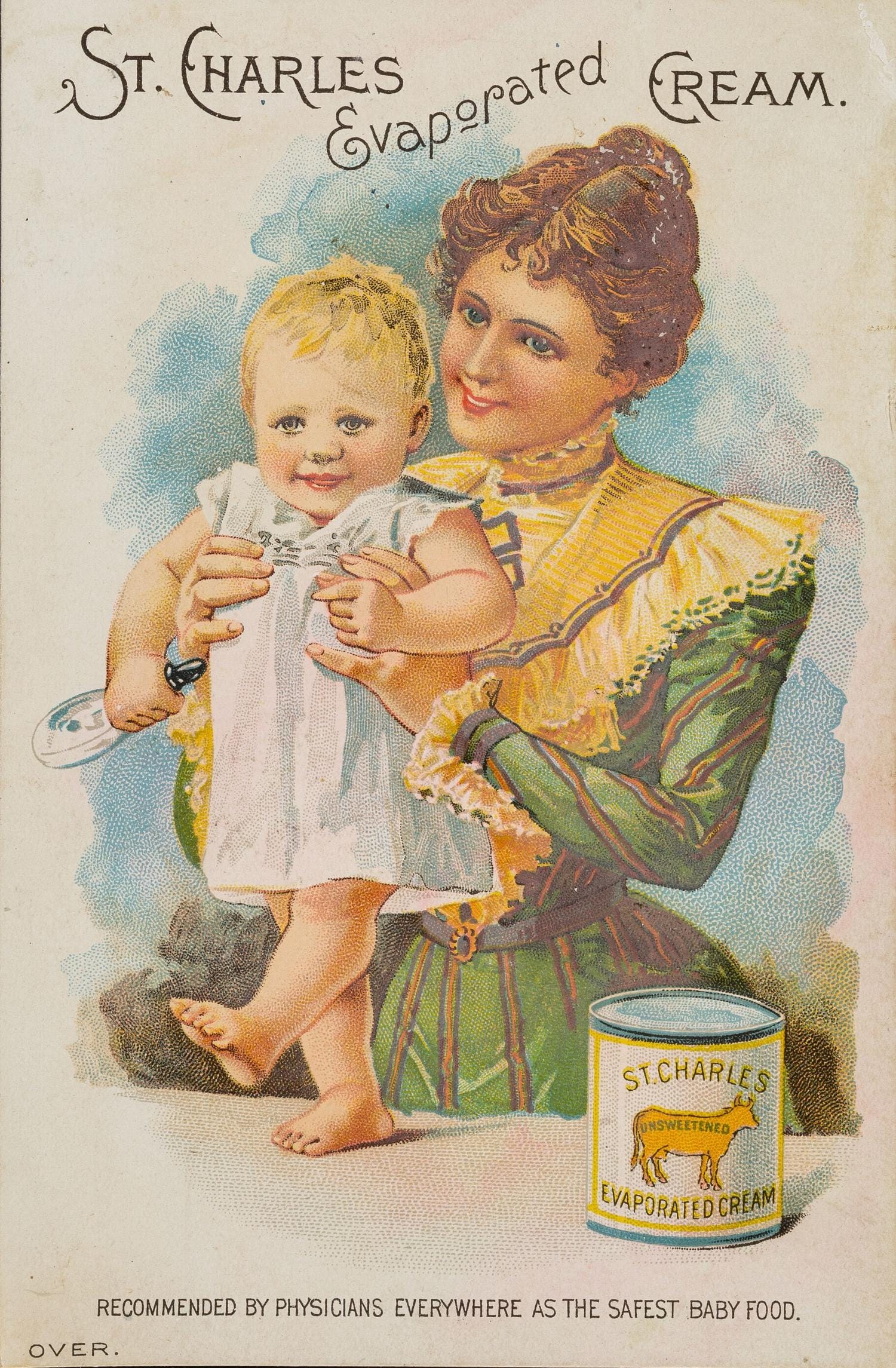
Walk down any dairy aisle in the Western world and you enter a moral landscape. Butter is ‘pure’, yoghurts are ‘guilt-free’, and ice cream is ‘sinful’. The language seems playful at first, but the more you look, the more you start to see something else: the foundations of an uncomfortable structure where pleasure requires permission and appetite demands supervision. Somewhere between the probiotic promises and the pastel tubs, eating becomes a question of virtue.
Let’s step back to 1993, when a US Dannon advert claimed that its Light ’n Fit yoghurt was ‘proof that there is a God and she is a woman watching her figure’. In this moment, God was reimagined as a dieting woman – low-fat yoghurt, her divine provision – and the idea seemed to stick.
Food is not supposed to function this way. Even Christian scripture insists that eating carries no moral weight: ‘Let no one pass judgment on you in questions of food and drink,’ writes Paul the Apostle. ‘We are no worse if we do not eat, and no better if we do.’ But contemporary food advertising reverses this position. Across the Western dairy aisle in particular, a borrowed religious vocabulary has reorganised appetite into a system of judgement, where foods are divided into virtuous and sinful, and eating becomes a daily act of self valuation…
READ THE REST OF THE ESSAY ON CHLOROPHYLL.
Bryony Streets is a food and culture writer interested in how eating reflects and reinforces systems of belief, power and control. She has a degree in English Literature and Language from the University of Oxford and works in food media. Her writing has appeared in Scribehound Food, The Historians Magazine, and The Charles Lamb Bulletin.
Self preservation
by Apoorva Sripathi
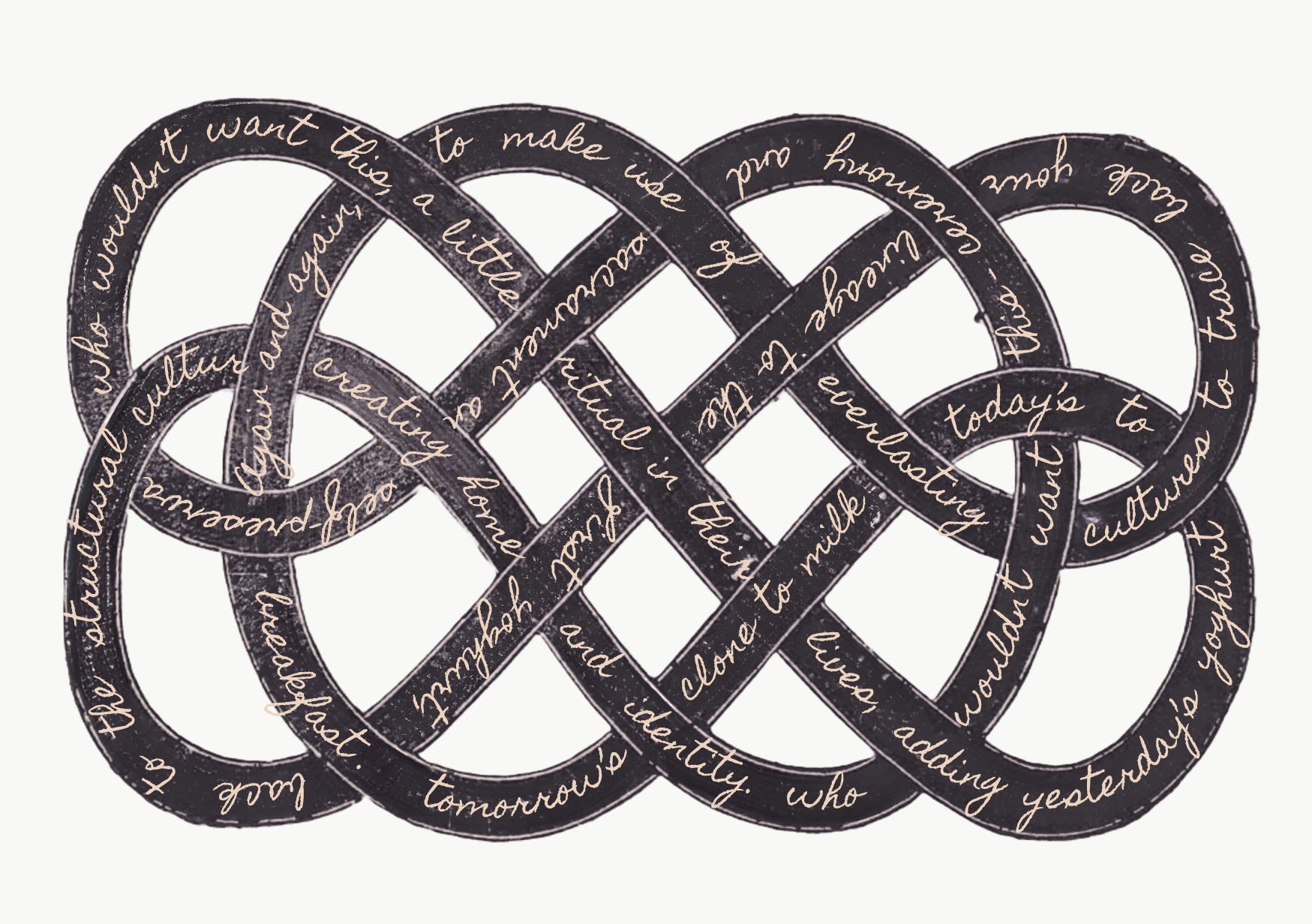
READ THE POEM IN WRITTEN FORM ON CHLOROPHYLL HERE.
Apoorva Sripathi is a writer, editor, poet, and artist from Chennai, now based in London. Her projects include shelf offering, an archive of food, art, memory, history, and politics and the grounded report, a repository of her writing, art, and everything else. She is the co-founder and editor of CHEESE, the magazine of culture, and her writing has been published in Kinfolk, Vittles, Wellcome Collection, and Feminist Food Journal. She is also the co-founder and co-editor of chlorophyll.