

REMINDER: Our next Feminist Food Friends meet-up, a holiday mingler and recipe swap, will be on December 15th! More information here. Tickets are free for premium subscribers to FFJ or any other FFF founding publication and start at just $3 USD for everyone else.
The end of our autumn SPOTLIGHT column is upon us! We hope you’ve enjoyed getting to know some incredible change-makers working towards more feminist food systems. While our attention is now turning to the launch of our CELEBRATE issue, we’d love to do more work like this in the future, so please get in touch with us if you’d like to suggest an interviewee.
So far, we’ve featured:
Damhee D. Hong (홍 담희) on culturally sensitive food studies methodologies
Chiara Bergonzini on gender equity in urban food policy
Ana Sarang (interviewed by Aysha Sana) on bringing women farmers into fair-trade supply chains
Lama Obeid on her reporting on food culture under occupation in Palestine (this one is an audio interview!)
And today, Naomi Robert on cutting-edge farming techniques with women and LGBTQ2+ farmers in a region affected by drought.
Naomi is a Senior Research Associate and Extension Associate at the Institute for Sustainable Food Systems, Kwantlen Polytechnic University, where she draws on her background in agricultural science and policy to bridge academic, practitioner, and community initiatives. She is also a PhD candidate (we share a phenomenal supervisor, Dr. Tammara Soma) and sessional instructor at Simon Fraser University, where her research and teaching focus on the impacts of neoliberalism in Canadian food and agriculture and how to centre equity and ecological integrity through economic reform.
As if she weren’t wearing enough hats already, Naomi is also a professional agrologist with the British Columbia Institute of Agrologists, co-chair of the Comox Valley Food Policy Council, and founder of Confluence Food Systems consulting. In late 2024, Naomi and her colleague Micheal Robinson launched the Pacific Coastal Dry Farming Collaborative, a farmer-focused research and extension project to build place-based climate change resilience through soil health.
In today’s multimedia interview, Naomi and I talk about the impetus for launching the project; the benefits and challenges of dry farming; how it’s going so far, and why working with women and LGBTQ2+ farmers is important for a more sustainable future. The interview starts with an audio reflection by Naomi on the impact of a changing climate on her local foodscapes, and concludes with reflections from Pacific Coastal Dry Farming Collaborative members on gender in agriculture. – Isabela
If you’ve enjoyed our SPOTLIGHT series, please consider supporting us as a premium subscriber.
Reflections on a changing foodscape by Naomi Robert
I’m biking my way up a hill on the outskirts of town, running late, when I stop abruptly to let a large black bear scramble out of the woods and across the bike lane. It’s startling, but not uncommon this time of year. The salmon are returning home to their native rivers on the coast to spawn and die, although the line between these two seemingly disparate activities is often blurry. Throngs of fish fight upstream, scraping over rocks, pushing through culverts, up currents and chutes. Every last ounce of energy is used in the fight to spawn. By the river, I notice that some have begun to decay before their journey ends and the distinction between life, death, and rebirth is unclear. For bears, eagles, rivers otters, salmon meat will help warm their bodies until the days get longer again. Large groups of birds, hover over the bank, swooping down to fish. These animals will carry the bodies of salmon into the forest. The nutrient-rich leftovers will decay into the forest floor to become trees, which in turn will shelter and nourish the many critters that call this place home. The Pacific Northwest runs on salmon-power.
But as the years go on, it’s getting harder for salmon to make the journey back home. Extensive logging in the headwaters, urban development, and climate change are making habitat conditions more difficult. Intensifying summer droughts are making summer stream flows lower and warmer — pitting many farmers, whom we rely on for food, against these fish, upon whom the whole ecosystem relies for food.
Isabela: Naomi, I’m so excited to talk to you about your work on dry farming. First, can you start by telling us how you got into this type of work?
I’m a Senior Research and Extension Associate at the Institute for Sustainable Food Systems at Kwantlen Polytechnic University. We’re an applied research and extension unit that focuses on supporting regional food systems on “Canada’s” west coast. I live on the Unceded Traditional Territory of the K’ómoks First Nation, colonially known as the Comox Valley. For those familiar with the geography of the area, we’re about halfway up Vancouver Island, on its east coast.
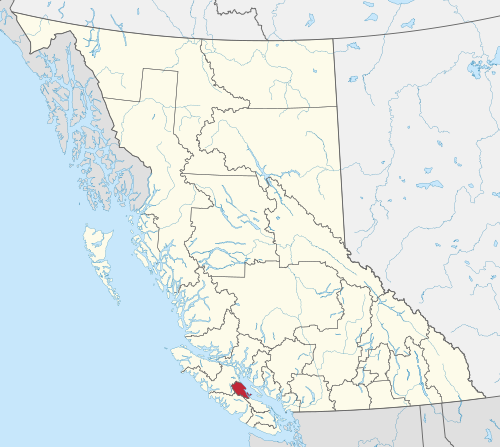
My background is a mix of earth system science, agricultural sciences, and policy – food has always been at the centre. And, as many of us know, climate change is a real wild card for the food system. I’ve been increasingly interested in climate adaptation work in food and agriculture. Like many others, I believe that climate change adaptation work is place-based. What works in the Prairies, or the Mediterranean, will look different than the temperate rainforests of this west coast and vice versa. For those reasons, I’ve been increasingly interested in working in my own community. And in this context, the impacts of drought are being felt by farmers all over the Comox Valley. In 2023, we had a particularly acute summer drought here on the west coast and, anecdotally, I heard about some farmers’ wells or irrigation ponds running dry earlier than ever before. By late summer, the provincial government ordered about 45 forage producers to stop irrigating because low streamflow conditions were threatening fish populations.
During that summer, I spoke with a few farmers who were interested in whole farm approaches to drought resilience — what could be done above and beyond efficient irrigation that could drastically reduce the need for supplemental irrigation. There was also a strong interest in what was happening in other regions, like Oregon and California, who had relatively comparable climates but more experience with drought. From here, I connected with Oregon State University Dry Farming program, which has been working on collaborative dry farming (farming without supplemental irrigation) research in their communities for some time. They provided some helpful guidance on how they initiated their programming, and I started working with the local farmers institutes and intensively grant writing to start up some demonstration sites, or trial sites, locally where we could test some varieties, dry farming practices, and host peer-to-peer learning workshops.
Importantly, I also looped in my colleague Micheal (Mike) Robinson to co-direct the project. Mike is an agriculturalist who works in extension with new entrant farmers and farms himself on Vancouver Island. Our goal for this work was to collaborate with local farmers to trial dry farming in our region and build place-based knowledge for how this practice can support climate resilience in agriculture. Importantly, we know that there are farmers in our region who are dry farming, but understandably, rarely have the time to work extensively outside of their farms to do things like initiate a community of practice, or run a workshop series. We wanted to connect with local experience and develop peer-to-peer learning networks to increase regional capacity.
Isabela: I had never heard of dry farming before speaking to you about this project. Can you tell us what dry farming is, and why farmers are interested in it?
Dry farming as a term is somewhat problematic, or at least a misnomer. All plants need water to grow. However, dry farming aims to reduce reliance on supplemental irrigation by preserving soil moisture. This is achieved using a suite of practices, such as selecting drought-tolerant plant varieties, diligently managing weeds to reduce competition for soil moisture, spacing plants out more widely so they have a larger soil reservoir for themselves, introducing wind breaks to prevent water loss from transpiration, and mulching to suppress weeds.
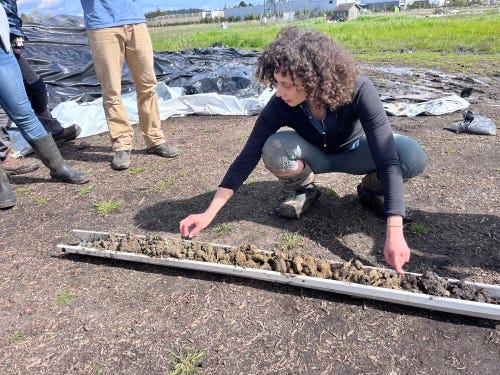
Importantly, there is no “secret sauce” or formulaic approach to dry farming; the application of these practices and their relative importance will vary between farms. The goal for this collaborative research is to learn alongside farmers, deepen our shared knowledge of what practices work in the soils and climates of Vancouver Island, and strengthen our collective dry farming capacity.
We see dry farming as a tool for farmers to advance climate adaptation, which they can apply in a way that works for them. For example, in a situation where they have access to some irrigation water but not enough to reliably irrigate everything all season, perhaps some crops can be irrigated and some dry farmed. Other farmers may choose to entirely dry farm based on their site conditions and farm goals.
Isabela: How has climate change impacted weather patterns in the Comox area?
This region is a temperate rainforest. The majority of that rain falls in the winter months between October-April and summer have always been relatively dry. However, climate change is exacerbating this pattern, bringing hotter and drier summers. According to historical data, the region on Vancouver Island where I live would receive approximately 140mm of rain between the beginning of June and the end of August. This year our research weather station recorded approximately 70mm of rainfall over this summer period.
Temperatures are also increasing, and daytime highs above 30C, previously rare, are becoming more common during the growing season. It’s also important to note that melting snow in the mountains can be an important source of streamflow during the relatively hotter and drier summer months. However, snow is melting faster and earlier in the spring, which, in combination with higher temperatures and drier conditions, yields lower streamflow levels in the valleys where we grow food.
Isabela: Those are pretty significant changes. What have the impacts been on farmers in the region?
After the drought in the summer of 2023, we organized a regional dialogue session on drought where local farmers in the Comox Valley shared the scope and scale of drought impacts on their farms. Some of the major issues they noted were water shortages and crop and livestock health. Drought conditions were causing water shortages, yield declines, crop loss, and livestock reductions. Farmers conveyed that they were seeing noticeable decreases in yields and experiencing crop loss due to lack of irrigation water and low precipitation.
Farmers also said that the changing climate conditions were compromising their livelihoods, resulting in reduced revenue and increased production costs that put additional strain on farm businesses and farmer livelihoods. This was particularly true for livestock operations, as many needed to purchase off-farm feed. Many farmers who did not have sufficient access to water had to purchase water, often requiring additional storage infrastructure.
Finally, farmers saw their soil health deteriorate due to sustained hot and dry conditions. This compounded challenges for crop growth and soil moisture retention.
Farmers also noted that the changes spurred mental health challenges, as drought conditions increased the stress and anxiety farmers felt regarding the vulnerability of their livelihoods.
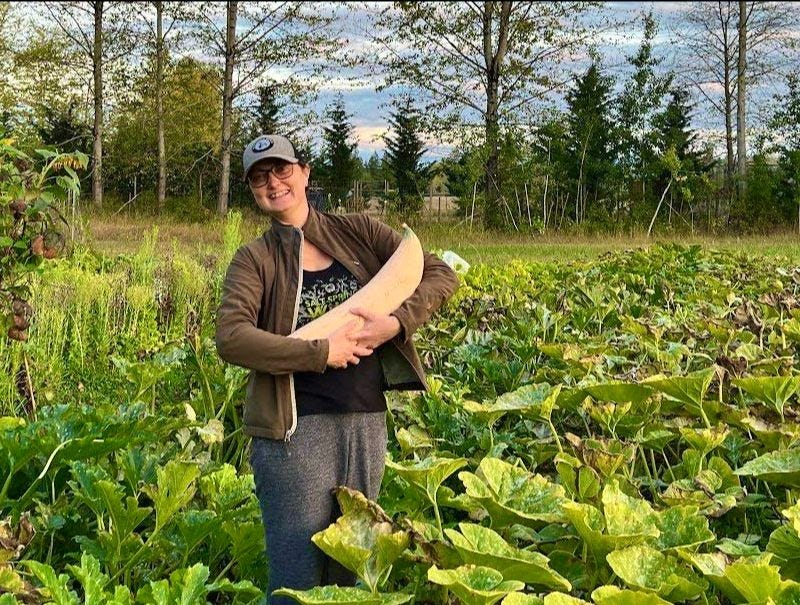
Although I primarily farm for my kids, I am currently dry farming because I couldn’t get a [ground] water license, which is a program relatively new to BC. We are on an ‘aquifer of concern’ and there are a few farms already drawing from the same ground water. Ground water runs out faster every year. One of the major rivers that farmers in our area depend on is also a river the salmon need for spawning. When the water runs low from irrigation use, the water warms to a point that it is too hot for the salmon. These trials aren’t just about our family or neighbouring farms, it’s for the ecosystem as a whole. – Jaclyn Kirby, Pacific Coastal Dry Farming Collaborative participant, Yellow Boot Farm, Comox Valley, BC
Isabela: How has the project been going? Is it proving fruitful?
This summer, my colleague Mike and I worked with three women farmers — Skye Larmour, Jaclyn Kirby, and Lisa Willott — to dry farm squash, tomatoes, and dry beans. Some farmers had been dry farming for several seasons; for others, it was their first time.
We learned so much this season alongside this incredible group of dedicated, knowledgeable and hard-working women. The farmers grew a significant amount of food without any supplemental irrigation, confirming that there are soils in our region with the capacity to dry farm. We installed soil moisture sensors at the beginning of the season at depths of one, two, three, and four feet. We used these to see how much moisture was in the soil and importantly how soil moisture changed throughout the season. While the top layer of soil dried out by mid-summer, I think the whole team was surprised by how much moisture was in the soil at depth. The plant roots were able to reach the lower depths to access moisture.
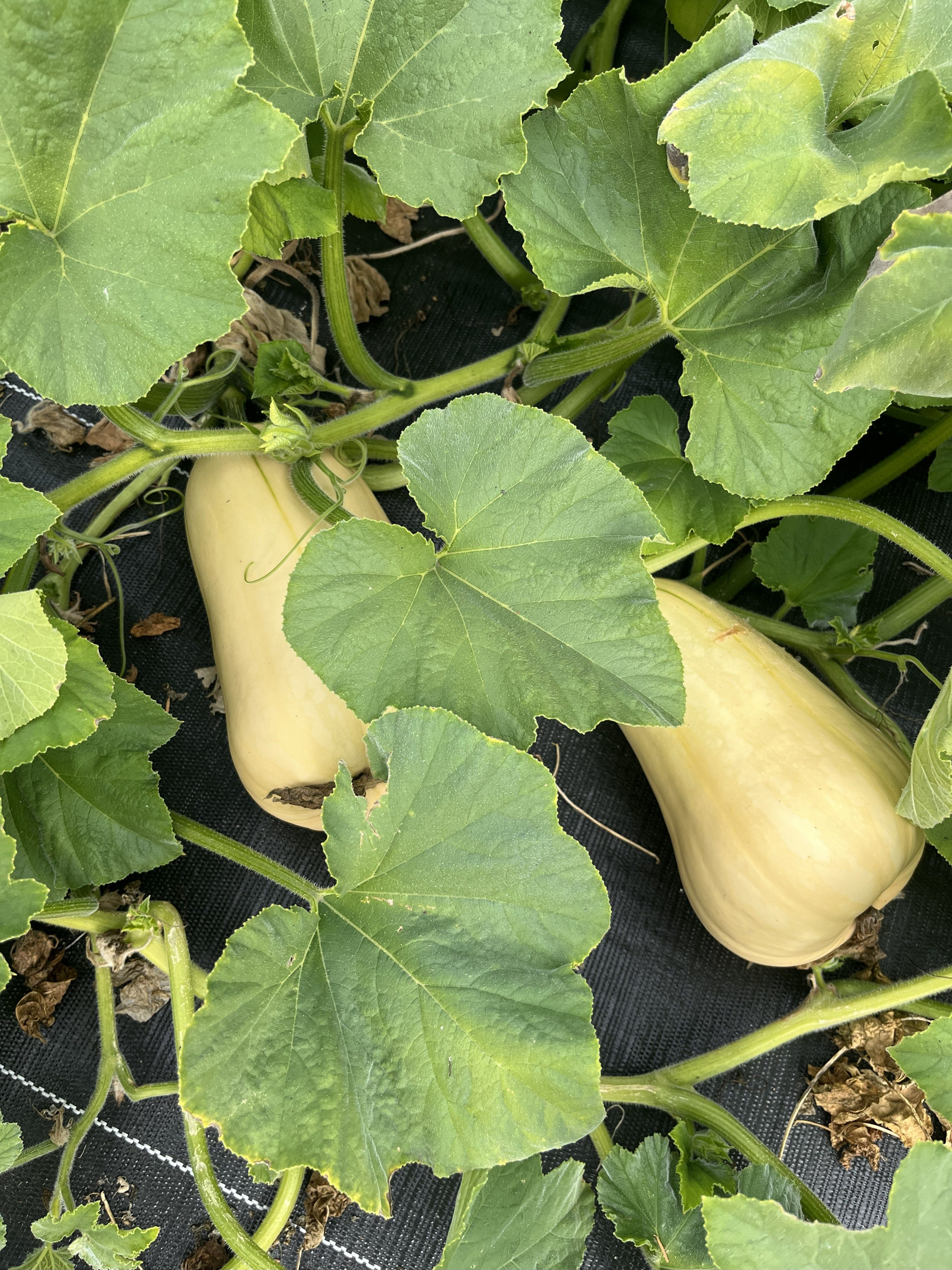
There was of course variation, both between sites and varieties. Some varieties seem to have performed better than others, and some sites seem to be more suitable for dry farming. We have a lot left to learn and this season raised so many questions about how to improve our systems. But still, by at large, I was quite surprised by how well these vegetables did without any supplemental irrigation. When we sampled some tomatoes during an end-of-season workshop, the whole group did that thing where you pitch forward suddenly to avoid having juice spill down your shirt. Even though we knew the plants were accessing water at depth, it still felt so surprising (and even a bit like a magic trick) to bite into a juicy tomato knowing they hadn’t been irrigated all season.
We have one season of trials and data under our belts, which in agricultural research is very little. But we have a team of inspiring farmers and I think we’re all feeling optimistic about what we can learn together, from each other, from the soil, and from data.
We’re figuring it out as we go, which feels uneasy. There’s not a lot of resources to research from and there are only a few local farmers to chat with about how to dry farm. We have been at it for two years now and I’m still figuring out the best crops, planting times, plant spacing, fertilization, and more. I’m also bad at asking for help, which is something every farmer needs. But I LOVE dry farming! I don’t need to hassle with irrigation lines, burst lines, timers, and the cleanup at the end of the year is much easier. And while the yield may be lower, I feel the food tastes amazing. - Jaclyn Kirby, Pacific Coastal Dry Farming Collaborative participant, Yellow Boot Farm, Comox Valley, BC
Isabela: I know that ensuring stability in this type of grassroots work can be tricky. What are some of the biggest challenges that you’re facing at the moment?
Securing funding is a perennial challenge for all of the research that we do, and this project is not an exception. I wrote six grants this past year to piece together the funds we needed to support farmers, research equipment, travel, seeds, staff time and workshop expenses. We’re extremely grateful that our two primary funders, the BC Ministry of Agriculture and the BC Centre for Agritech Innovation, saw value in supporting this work this year — but they, like others, have budgetary constraints and their capacity for ongoing support is uncertain at this time.
The value of this work increases the longer we’re able to do it. One year of agricultural research yields many more questions than it answers and really building our collective place-based understanding of dry farming can for this region and supporting peer-to-peer learning takes time. We need to secure funding that shares that long-term vision.
Naomi Robert is a Senior Research Associate and Extension Associate at the Institute for Sustainable Food Systems, Kwantlen Polytechnic University, a PhD candidate and sessional instructor at Simon Fraser University, a Professional Agrologist with the British Columbia Institute of Agrologists, the co-chair of the Comox Valley Food Policy Council, and the founder of Confluence Food Systems consulting. She lives on the Unceded Traditional Territory of the K’ómoks First Nation, caretakers of the Land of Plenty since time immemorial. If you would like to engage further with her work, please check out the links at the end of this newsletter.

Currently, all of the farmers hosting trial sites for the Pacific Coastal Dry Farming Collaborative are women. Naomi asked them to share some reflections on how they understand the role of women in climate adaptation and food provisioning, and how their gender identities influence how they show up for this work. Here is what they said.
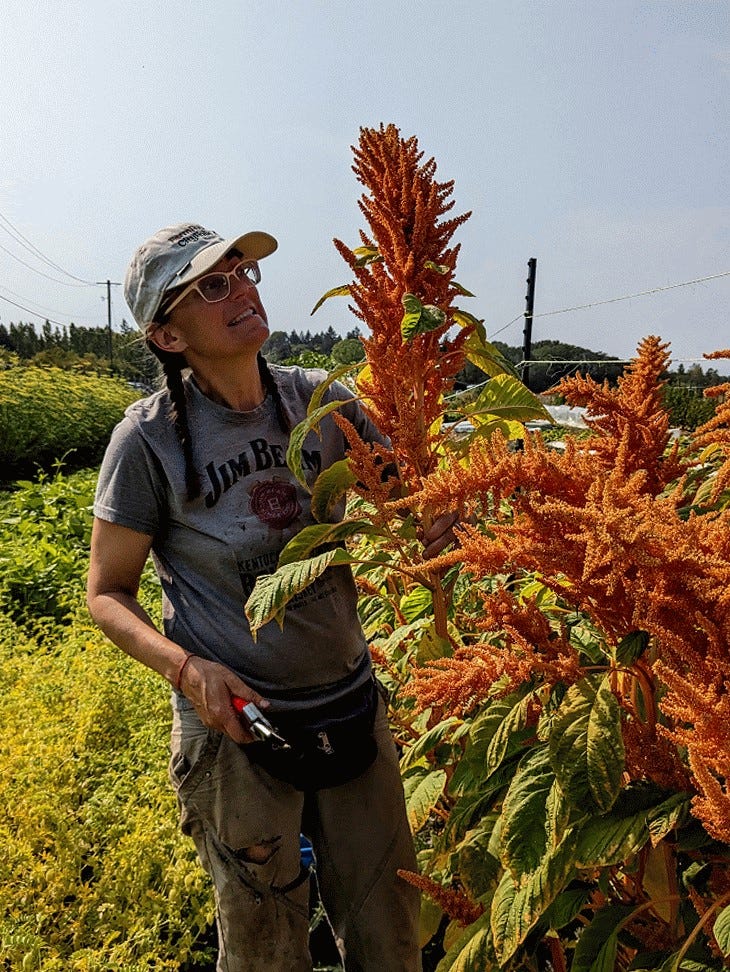
Lisa Willott, Farmfolk Cityfolk Seed Farm Hub Site, Sandown Centre for Regenerative Agriculture, North Saanich, BC
I think it’s both sad and uplifting that in the past 20 years of working on small-scale farms, those around me are predominantly women. It’s uplifting because usually the motivation behind wanting to work in food security or farming is based on an ethic of care and community responsibility, and working with anyone who shares these values feels meaningful to me. The part I don’t love about it, is that I think there are a lot more women who are willing to accept lower pay in order to do meaningful work, and because women still get paid less than their male counterparts in most careers, this normalizes lower wages and livelihoods. I hope that there will be a shift to valuing all people involved in taking on caretaking roles through their work in food sovereignty, agricultural climate adaptation and food provisioning.
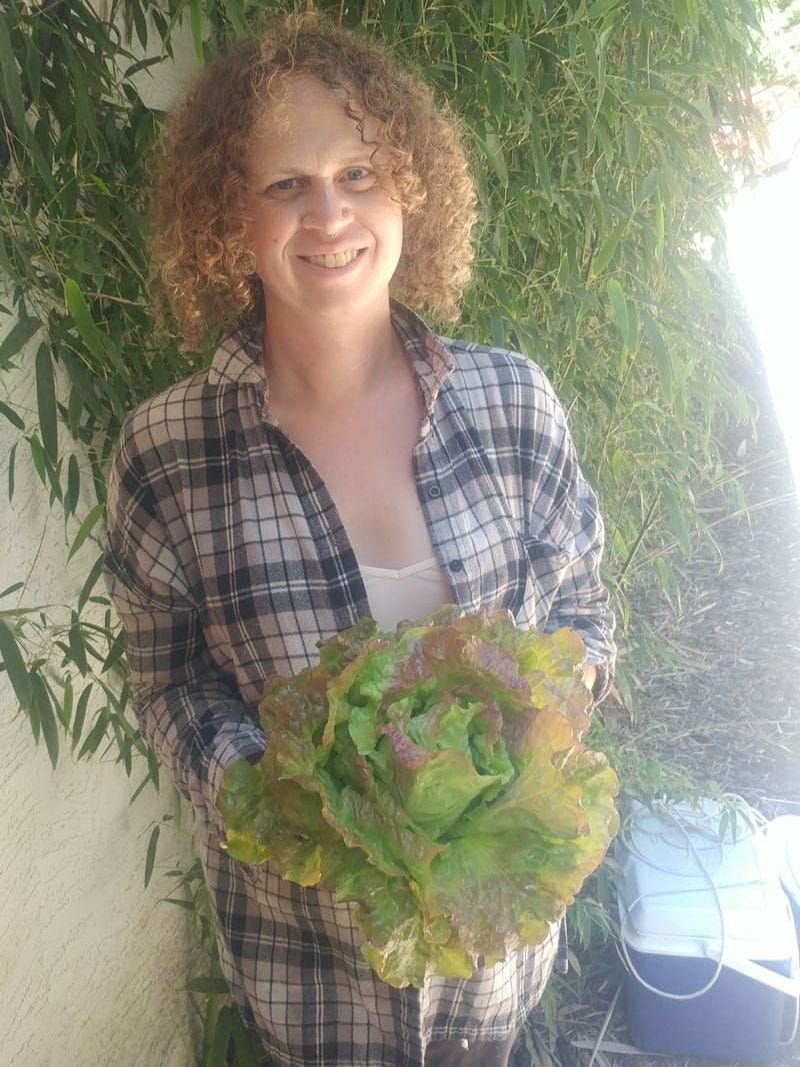
Skye Larmour, Tardigrade Seeds, Salt Spring Island, BC
Women are unacknowledged leaders of an agricultural response to climate change. The nature of our climate crisis is neither technical nor structural; it’s about power and relationships. That makes women — and trans and non-binary folk — most capable of solving it.
I’m not surprised that the proportion of women farmers in Canada is increasing. A mentor of mine, a woman who won a top leadership award, told me once that she attributed her success to paying attention. That’s more than seeing and hearing. She listened between people’s words, processed information intellectually and emotionally and was broadly collaborative. She could articulate the needs, fears, hopes, and stressors of colleagues better than anyone. Her method was “applied relationships.” By paying attention, she created change in a system that resists it.
Women, trans, and non-binary folk are doing this. They’re quietly taking up the work that’s needed: an agricultural “revolution,” or, etymologically, the work of “rolling back” to a state of agriculture where relationship is fundamental.
I’m a transgender woman who has seen gender through the eyes of a man and a woman. Unlike the stereotype narrative, I was comfortable spending my first decades as a man. I inhabited male-dominated boardrooms and lived in “male culture.” Then I transitioned. I started paying attention. And preferred collaboration, not competition, as the first response to any problem. I glimpsed how both nature and nurture favour women for this challenge.
Climate change won’t be solved by high-level agreements litigated by mostly men. Answers will be nurtured by the powerful attention of women, trans, and non-binary folk.
Further links to Naomi Robert’s work:
Discussion papers and podcasts
Robert, N., Gwun-Yeen Lennon, K., Mullinix, K. 2024. “Toward Ecologically, Economically, and Socially Beneficial Agricultural Technology Adoption in BC”. Richmond, British Columbia: Institute for Sustainable Food Systems, Kwantlen Polytechnic University. https://www.kpu.ca/science/isfs/agritech-policy-discussion
Tatebe, K., N. Robert, R. Liu, A. dela Rosa, E. Wirsching, and K. Mullinix. Protection is Not Enough: Policy Precedents to Increase the Agricultural Use of BC’s Farmland. Richmond, British Columbia: Institute for Sustainable Food Systems, Kwantlen Polytechnic University, 2018. https://www.kpu.ca/science/isfs/agricultural-land-use-in-the-alr
Recent academic/peer-reviewed publications
Robert, N., Soma, T., & Mullinix, K. (2025). Neoliberal growth vs food system democratization: narrative analysis of Canadian federal and civil society agri-food policy. Agriculture and Human Values, 42(2), 923–943. https://doi.org/10.1007/s10460-024-10647-3
Robert, N., & Mullinix, K. (2022). Beyond GDP: Lessons for Redefining Progress in Canadian Food System Policy. Frontiers in Communication, 6. https://doi.org/10.3389/fcomm.2021.762482
Naomi Robert, & Kent Mullinix. (2018). Municipal Policy Enabling Regional Food Systems in British Columbia, Canada. Journal of Agriculture, Food Systems, and Community Development, 8(B). https://doi.org/10.5304/jafscd.2018.08B.003