

This week, for our ‘architecture of food’ issue, we’re sharing both an essay and a poem, which were published by our partner publication chlorophyll. Priceless explores the fascinating history of ladies’ menus, which omitted prices for women diners, while No Catch by Aileen McKay considers changing food practices in the age of technology and urbanization.
You can find short teasers below, and read them in full on chlorophyll’s site.
Priceless by Tien Nguyen
Tien Nguyen is a food and culture writer, an editor at Synonym Magazine, and the co-author of several cookbooks. She lives in Los Angeles.
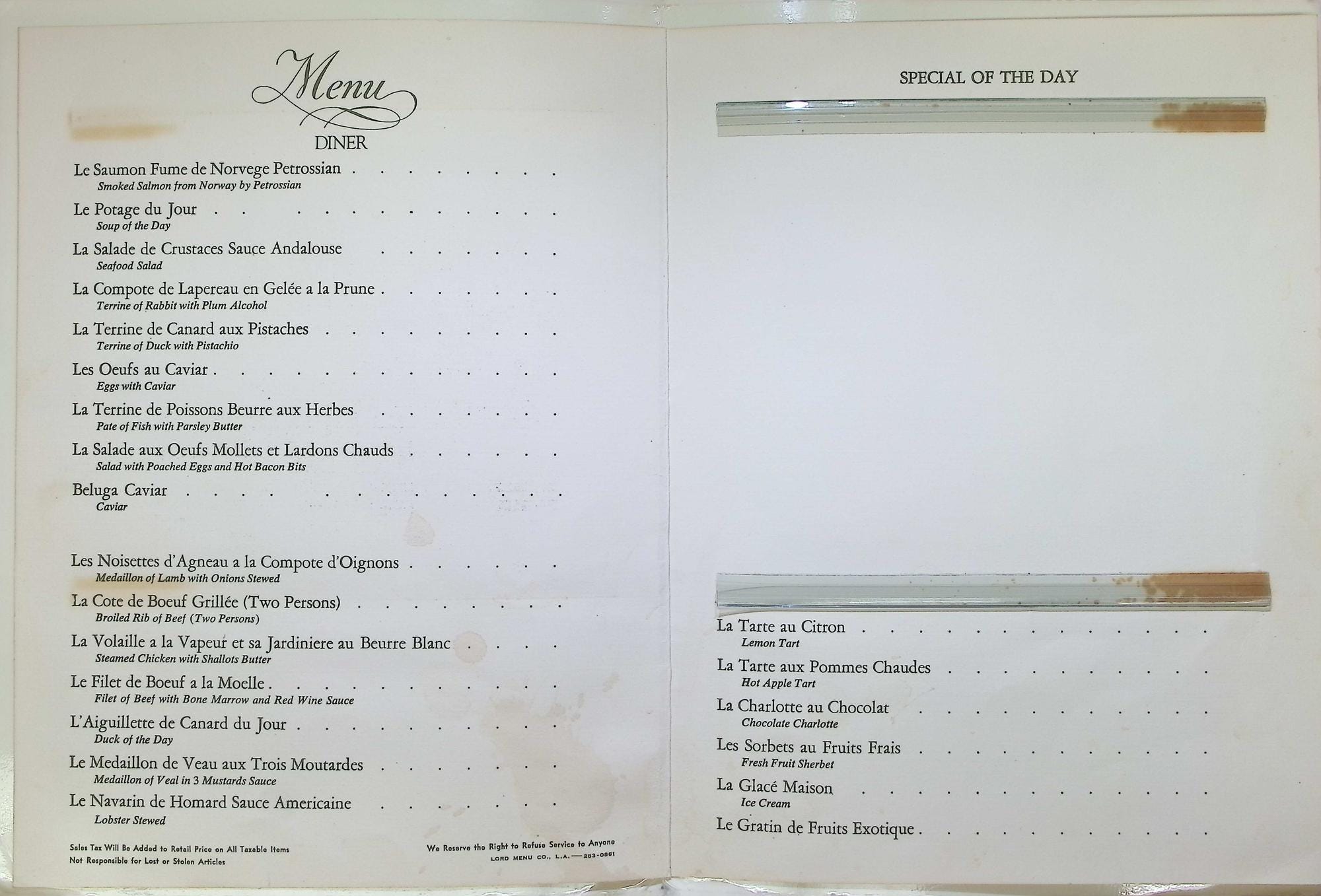
On a Thursday evening in July 1980, Kathleen Bick and Larry Becker walked into L’Orangerie, an upscale French restaurant in Los Angeles. The two were business partners who’d had some success, so the dinner was to be a celebratory one, her treat. They were handed menus.
The restaurant was expensive, but how expensive, Bick didn’t know, because her menu did not include any prices. Becker’s menu, on the other hand, did. They learned that when men and women dined together, the restaurant gave men menus with prices; women, menus without. According to a discrimination lawsuit Gloria Allred later filed on Bick and Becker’s behalf, this policy ‘caused each of them severe humiliation’, so much so that they left.
When Allred asked L’Orangerie why it had separate menus, Virginie Ferry, who owned the restaurant with her husband Gerard, ironically invoked Gertrude Stein: ‘Because a woman is a woman is a woman.’
Allred’s response: ‘What does that mean, what does that mean, what does that mean?’…
READ THE REST OF THE ESSAY ON CHLOROPHYLL HERE.
No Catch by Aileen McKay
Aileen is a freelance editor and mentor. Her writing has found homes with little living room, From Glasgow To Saturn, Die Zeit, Common Weal, SNACK, Vegan Connections, Cosmofeminism, and Kendal Mountain Festival.
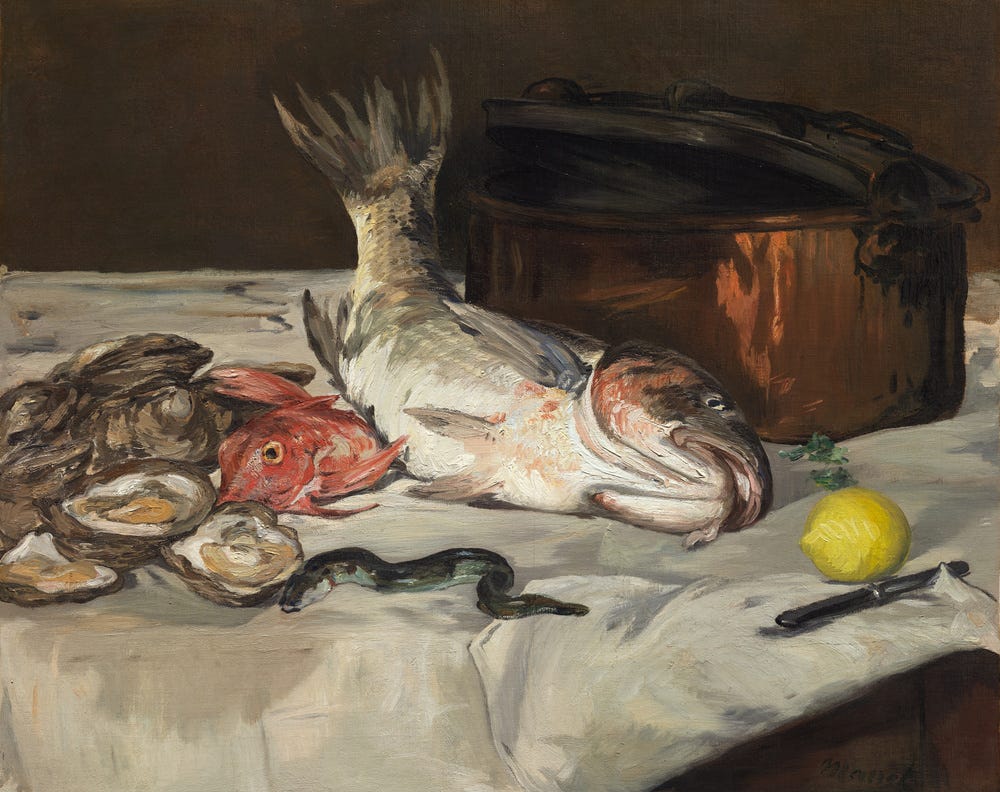
Previous inhabitants of this North Sea
neuk — Highlanders before me —
took quotidian care to use up every part
of their animals: unmeaty bits, too,
all grizzle and ruffage and gleam
swirled with meal and blood, then
sack-stuffed for boiling and boiling…
There is still a restaurant near me in Britain that does this - though now they give the prices to the 'lead customer', who is usually a man. It is useful when treating others and not wanting them to worry about money (and therefore presumably drives up spending, benefitting the restaurant), though presumably involves all sorts of assumptions and profiling of customers, which will inevitably lead to men being handed the prices more than women.