

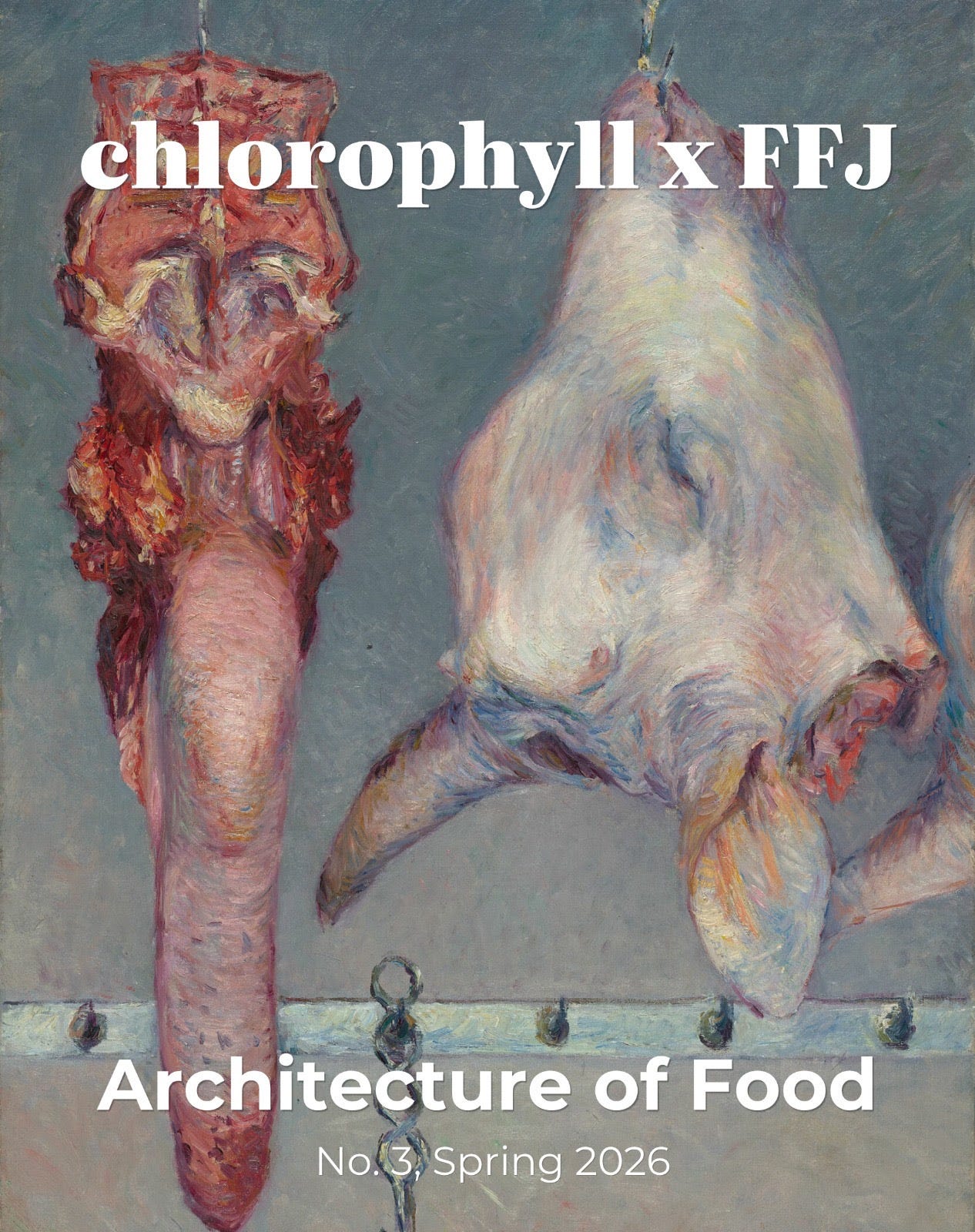
We’re delighted to announce the launch of The Architecture of Food, a joint issue from Feminist Food Journal and chlorophyll magazine. chlorophyll is edited by Apoorva Sripathi (who has also done incredible writing, editing, and illustrating for FFJ over the years) and the wonderful Anne Wallentine.
For this issue, we asked writers to share prose, poetry, and essays about the structures and hierarchies of meals, menus, restaurants, and food systems, and they delivered a compelling array of perspectives. Coming up, we have:
THE ARCHITECTURE OF FOOD
Fiction
The Whistleblower by Margaux Vialleron
Essays and Nonfiction
Meat and Two Veg by Beth Whelan (out today!)
Shellshocked by Genevieve Bentz
Ladies’ Menus by Tien Nguyen
Fold in the Cheese by Alexandra Badescu
Maamoul: The Architecture of Ritual and Resistance by Lina Saad
No English Menu, Please by Rebecca Thimmesch
Women at the Tables of Empire by Lea Horvat
Show Kitchen, Shame Kitchen by Loukia Constantinou
The Devil’s in the Dairy by Bryony Streets
Bread and Rice by Misha Paul
Cuts and Foundations by Ritika Sharma and Nandana
Poetry
Self preservation; Culture Club by Apoorva Sripathi
Sugarcube by Lari Burgos
On Your Heart by Hena Mustafa and Nasma Kublawi
No Catch by Aileen McKay
It’s been a pleasure to explore this convergence of great writing in collaboration with chlorophyll, and we hope you enjoy the issue as much as we enjoyed producing it.
We’ll be publishing a new piece from the issue each week over the next few months, alternating between featuring the full piece on FFJ and on chlorophyll. In the weeks where content is not featured on our site, we’ll send a newsletter to direct you to chlorophyll to read the piece in full!
Today’s excellent first essay, launching on chlorophyll, comes from Beth Whelan and explores the significance of ‘meat and two veg’ in the industrial history of Northern England. Check out an excerpt below and read the full piece here.
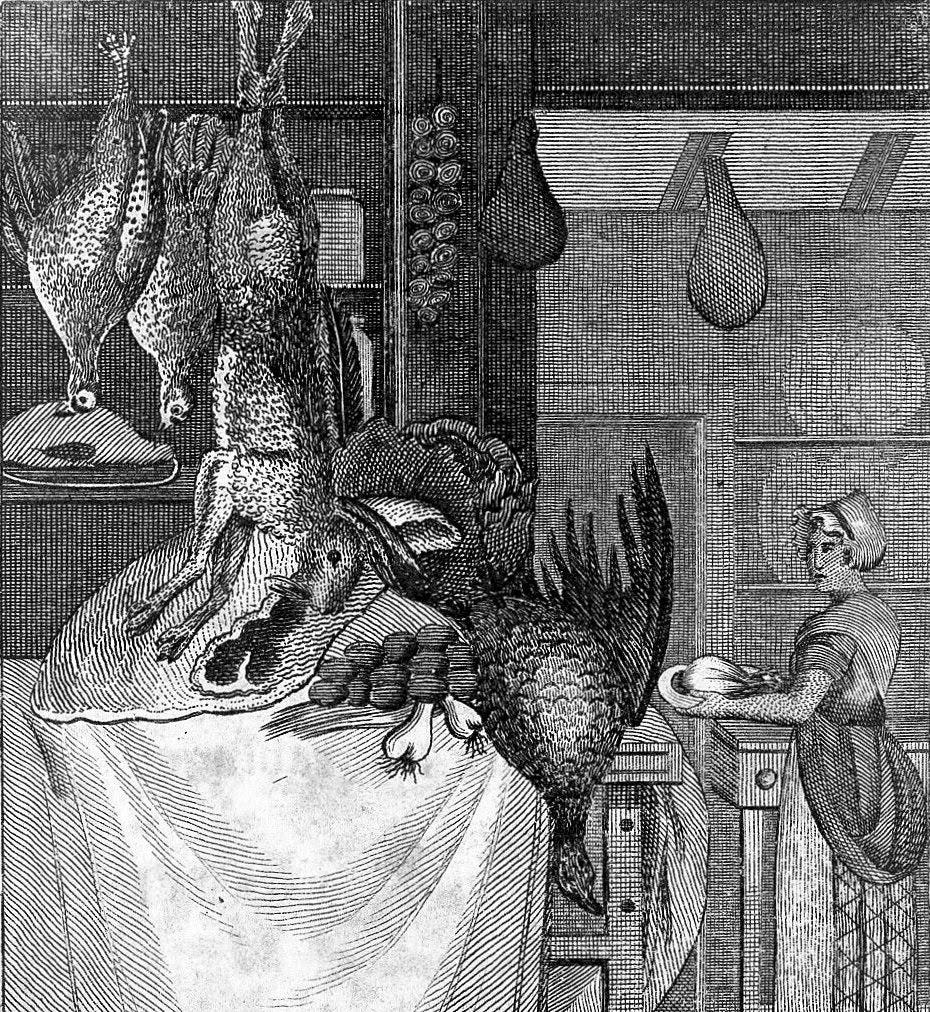
Meat, Two Veg, and a Side of Comfort
by Beth Whelan | Read it now on chlorophyll
Meat and two veg is often dismissed today as a symbol of culinary monotony, an uninspired beige relic of a British past better left in the rearview mirror. But when I look at a plate of food, I rarely see a lack of imagination, I see my grandad and the fierce, quiet love of the woman who kept him alive. I am 35 years old, born in May 1991. Just two months before I arrived, the heavy iron gates of Agecroft Colliery, a coal mine in Pendlebury, Lancashire, closed for the last time.
My grandad had been an electrical miner there since 1940, navigating the labyrinthine depths of the coalfield for over 50 years. To the world, he was a skilled man, an electrician who crawled through gaps the size of a washing machine door to repair machinery in the damp, explosive darkness. To his family, he was the provider who carried the silent weight of the 1974 strikes, a time when he chose to cross the picket lines and accept the label of ‘scab’ to ensure his wife and three young children didn’t go hungry. That choice was made at the kitchen table, and it was the women of the north who ensured that the table remained a sanctuary.
If I ask any of my Welsh or southern friends who the best cook they know is, they’ll say their mum. But among my friends who grew up in the north, they’ll say anyone else…
Read the rest of this essay here and stay tuned for next week’s piece on FFJ.
Very relatable. Even though my dad was not a miner, the same type of meals, through his years of growing up in Lancashire, were served in our home. I regard these meals as true comfort food.